Calabar’s Ghosts: Tracing My Family Through a Slave Port (pt 1)
A reflection on visiting Calabar’s slave museum—where grief, ancestral connection, and an unexpected conversation with a historian bridge past and present.
Posted: 2025-Jul-07
Wednesday, July 4, 2007
Arrival at the Marina Resort
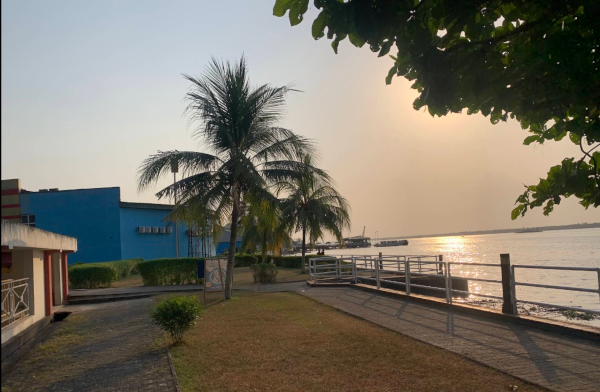
I am afraid that I cannot properly express what I have experienced tonight here in Calabar, but I will try. At the end of the conference, we all went to the Marina Resort down at the waterfront of Calabar. (Calabar is an incredibly beautiful and very very clean city... more beautiful than I had heard). I didn't really know what the Marina was at all, but it is a nice, new riverfront park with a carousel and picnic areas etc. It also has a rather cheesy slave museum.
A Sudden Realization
As we all were entering the museum for a tour, I had a sudden revulsion, as it dawned on me that Calabar was likely the port from which the slaves from Kanuri land would have been shipped. Calabar is about due south of Maiduguri. Despite the rather cheesy exhibits, I felt an overwhelming sadness, knowing that this was where our family left Africa.
The Gulf Between Us
In all the time I have spent in Africa, I have always felt very connected to the people here, who have always welcomed me as family once they know our family history. Tonight, for the first time, I felt a gulf between me and the Africans. The gulf was simply that we were looking at the same exhibits but our experiences were from opposite ends: my family left as slaves while theirs stayed behind. My emotional distance was mirrored in my physical distance, as I lingered behind the very end of the group.
Solitude at the River
As we exited the building, I went a short distance away from everyone and stood at the walkway overlooking the river and the setting sun. A few canoes with sails were making their way up the river to home. Despite the great beauty of the night, I felt only grief and sadness. I felt the connection of my Kanuri grandmother in a very personal way that I had not felt even in Maiduguri.
I remained at the river's edge until it was time for us to return to the bus for the drive back to the hotel. I wish I could have spent more time to ponder and feel, but even the short time I had left me emotionally drained.
An Unexpected Guide
In one of those blessings that are too much almost to believe, there has been an African American history professor who is researching slavery here in Calabar who has been attending our conference and who was with us tonight. She is mixed as well (her mother is black, her father is white) and her husband is white. They were both here with their 4-6 month old baby girl.
They shared a flight from Lagos to Calabar on Monday with one of my NAPTIP partners. As they chatted on the plane, he invited her to attend our trafficking seminar as she is researching both slavery of old and slavery of modern times. She is also a lawyer who returned for a Ph.D. in history. She and her husband are both professors.
As I was walking along the river back to the bus (think bigger river than the Potomac river... maybe twice or three times as wide), I felt a great desire to speak with her to inquire whether slaves from Kanuri land would have been shipped from Calabar. Unfortunately, they were too far ahead to catch them, and they were on the other bus during the ride to the hotel.
Carrying the Past Forward
As we arrived at the hotel, they spoke with me to say they had decided to come to Abuja also and would like to talk with me there. She said she wanted to know more about my family history research (I had briefly related the story during the conference to emphasize the TIP was the same as trafficking). We ended up speaking for maybe an hour in the parking lot. Her husband held the sleeping baby in his arms the whole time.
She confirmed that virtually all the slaves in what is now Nigeria would have been shipped from Calabar. It simply confirmed what I had already felt earlier tonight. She and her husband were both so comfortable to speak with. I shared with them what I had felt tonight and how important my search has been in making my life complete.
We spoke at some length about how to go forward in searching for Christiana's mother in England. No amazing breakthroughs, but she did tell me that there is a database of slave ships available on CD-Rom that might be helpful in the search. She also suggested going to Maiduguri to find someone with the oral history of the area. I am looking forward to seeing them in Abuja in a few days to continue our conversations. I wish Victoria were here to meet them. They are really a very nice couple.
Interestingly enough, her husband told me tonight that when she first saw me, she knew I was African American. It is funny that some people see it instantly.
Well, it is going to 10 p.m. I will still need to ride the okada (motorcycle taxi) back to the hotel. There really aren't any taxis here as there are in Abuja, so it is my only choice.
Oh, I guess I should say that I am considering taking a flight later in the day tomorrow than I had originally planned. My new friends Bill and Rebecca were telling me there is a very good slavery museum here in Calabar. I think if I can arrange it, I will visit it tomorrow before flying out to Abuja. Who knows when I will get the chance to return to Calabar.
Related Posts
Calabar and the Weight of Chains (pt 2)
Returning Home to Borno